Pistes d'exploration
:
Browse through the book. Discuss the page layouts, features and organization of information.
:
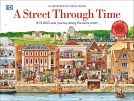
Read with a partner, making use of the interactive features: look for the “time-traveller” who is hidden on each page; answer the questions in the captions.
:
Choose one of the time periods. Compare and contrast aspects of life then and now (social structure, transportation, housing, etc.). Use a graphic organizer such as a Venn diagram or T-chart.
:
In which era would you like to live? Write a diary entry as if you lived at that time, incorporating facts from the text and illustrations.
:
Browse through the book. Discuss the page layouts, features and organization of information.
:
Explore the pages to find places that still exist today. Organize them into private, commercial or industrial venues.
:
Choose one of the time periods. Compare and contrast aspects of life then and now (social structure, transportation, housing, etc.). Use a graphic organizer such as a Venn diagram or T-chart.
:
Recreate a picture of your street or city today in a similar style. Write a few vignettes to highlight certain elements of your street.
:
Browse through the book. Make sure you understand the heading of each chapter. Add new vocabulary to your notebook and check your understanding with a classmate or in a dictionary.
:
Select a two-page spread to inspire the creation of a diorama. Using index cards and pertinent vocabulary from the book, prepare a text that explains why you chose this historical period.
:
Practise presenting and explaining your diorama to your classmates, using the index cards. Discuss the meaning of open-ended questions and prepare some regarding your classmates’ dioramas.
Mots-clés
Non-fiction, city life, Europe, history, seek-and-find book, social change, time lines