Édition papier : 9780140559965
|
PréscolairePrimaireSecondaire
|
||||||||||||
|
4ans
|
5ans
|
1re
|
2e
|
3e
|
4e
|
5e
|
6e
|
1re
|
2e
|
3e
|
4e
|
5e
|
Talk with a friend as you read and make sure you both understand the definitions of the words used in the text.
Write sentences containing at least two alliterative words. Use the book as a model.
With a friend, find other words in the illustrations beginning with the specific letter and create alliterative sentences.
Record yourself reading the book after lots of practice. Share it with a younger class.
Read the phrases for each letter of the alphabet. Choose your favourite; practise it and present it to a friend.
Use resources to find the meanings of new words. Use these new words in a conversation or in a text.
Scan the illustrations with a partner. Find additional words beginning with each specific letter. Write an alliterative sentence.
Do a picture walk.
Take on the author’s challenge at the beginning of the book. In small groups, choose a letter and turn to its page in the alphabet book. Find and list all the words beginning with that letter on the page, both written and unwritten. Keep a running track throughout the year to find as many words as possible.
With a partner, create new alliterative sentences for four different letters. Practise these tongue-twisters, then record each other trying out some of the difficult ones.
Use one of your alliterative sentences as a story prompt. Use a thesaurus to maximize the use of new descriptive vocabulary.
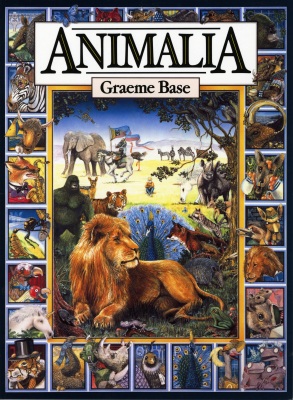
Real animals and mythological beasts are the stars of this interactive alphabet book that's both verbally and visually engaging. Each full or double-page spread pays tribute to a letter using alliterative text and lush, vibrantly detailed illustrations that have an illuminated quality to them. Scattered about each tableau, in addition to the showcased bird or beast, are numerous other objects, all beginning with the featured letter. Here, for example, is W: “Wicked Warrior WASPS wildly waving Warlike Weapons.” In addition to the insects in the foreground, careful readers will also spot a witch on a broomstick, wigwams, a well, a washing machine and a woman hanging out her wash. A few of the less familiar words (e.g. “Kookaburra,” “preening,” “rickshaws”) will open up rich opportunities for vocabulary exploration. The alliterative tongue-twister text begs to be read aloud repeatedly, just as the images invite revisiting for the searchable objects. This book will have independent and shared readers chanting the tongue twisters and poring over the pages again and again.
Envoyer le lien de ce titre par courriel.
Si vous préférez simplement copier-coller le lien pour votre propre usage, cliquez avec le bouton droit sur ce lien, et choisissez « Copier le raccourci» ou «copier l'adresse du lien ».
* Vous pouvez acheminer ce lien à plusieurs destinataires en séparant les adresses courriel par des virgules.
| Tweeter |