Édition papier : 9781550375046
|
PréscolairePrimaireSecondaire
|
||||||||||||
|
4ans
|
5ans
|
1re
|
2e
|
3e
|
4e
|
5e
|
6e
|
1re
|
2e
|
3e
|
4e
|
5e
|
Talk about the animals and Inuit culture depicted in the book. How do the illustrations help you understand the new vocabulary?
Using the introduction and the text at the back of the book, make a Venn diagram showing the differences and similarities between people who live in the North and people who live in cities in the South.
Create a class book about numbers. Draw the corresponding number of animals on each page and add captions that describe what they are doing.
Retell the story using the animal and action vocabulary.
Examine the simple sentence structures. Chart them as subject, action and complement. Where are numerals and descriptive adjectives placed in the sentences?
Notice the names of animal groups. Do you know others? Create a counting book with animals from your region. Research the group names for these animals. Read your counting book to a group of younger students.
I Is for Inuksuk: An Arctic Celebration, Caribou Song
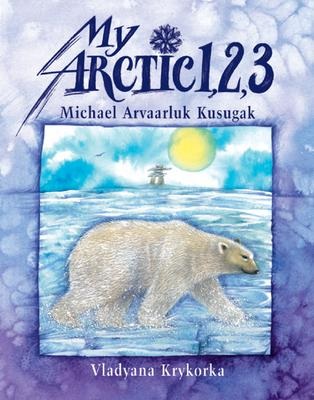
This counting book takes young readers on a tour of animals of the Arctic. Information on the animals is combined with lush illustrations of their habitat. Bright ice and a dramatic sky form the backdrop for 1 polar bear and 2 ringed seals. The complexities of the food chain and interdependence are suggested, as the story brings young readers from 1 to 10, then 20, 100 and finally 1,000,000 (“Millions of berries ripen in the fall…”) right back to one—a single polar bear, who “sees the berry pickers and says, ‘Never mind. They do not look like very good meals.’” Highly recommended is the introduction section, which gives southern readers a sense of Arctic living: “I grew up in Repulse Bay. When I was a little boy we hunted seals . . . My favourite food is maktaaq . . . the skin of the whale.” This small but mighty introduction also passes on a reverence for the animals in the book. Children will enjoy seeing examples of the Inuktitut syllabic language at the bottom of each page. The end material includes a glossary and a fascinating section on the author’s own experiences of Arctic living with his family, traditional style.
Envoyer le lien de ce titre par courriel.
Si vous préférez simplement copier-coller le lien pour votre propre usage, cliquez avec le bouton droit sur ce lien, et choisissez « Copier le raccourci» ou «copier l'adresse du lien ».
* Vous pouvez acheminer ce lien à plusieurs destinataires en séparant les adresses courriel par des virgules.
| Tweeter |