Édition papier : 9781452100043
|
PréscolairePrimaireSecondaire
|
||||||||||||
|
4ans
|
5ans
|
1re
|
2e
|
3e
|
4e
|
5e
|
6e
|
1re
|
2e
|
3e
|
4e
|
5e
|
Brainstorm other words and phrases that could be used in a wordle context. In pairs, choose a wordle from the list and illustrate that phrase (e.g. lettuce/let us, window/win doe).
With a peer, practise saying the wordles. Why is it important to enunciate words clearly and to respect or emphasize punctuation?
Brainstorm a list of homonyms and use them in sentences to illustrate their different meanings.
Read the book for pleasure. Distinguish the differences in meaning and spelling of the wordles.
With a partner, do some research to find another wordle to add to the list.
Create a section of your word wall for common homonyms and their definitions.
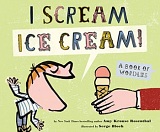
Wordles, this book explains, are phrases that sound the same, but can mean two (or more) different things. Young readers will have great fun flipping from one meaning to the next—perhaps trying to guess each new phrase as they do. “Heroes. He rows;” “Me, cloud. Meek. Loud.” Lively illustrations use loose, thick lines, flat colour and photo-textures to depict the wordle phrases. “A family affair” shows a collection of individuals strolling across the spread, each wearing a unique hat. The following spread shows the same group, hats raised to the reader, with wild, crayon-effect hair springing from each head: “A family of hair.” In another image, eyeglasses fly off a man peering into a telescope: “I see!” The next image shows a pirate ship on finely etched waters, surrounded by icebergs: “Icy! Aye, sea!” This book is a great resource for exploring word-sounds and meanings. It could be used to inspire the creation of lists, poems and puns, all made from words that sound the same.
Envoyer le lien de ce titre par courriel.
Si vous préférez simplement copier-coller le lien pour votre propre usage, cliquez avec le bouton droit sur ce lien, et choisissez « Copier le raccourci» ou «copier l'adresse du lien ».
* Vous pouvez acheminer ce lien à plusieurs destinataires en séparant les adresses courriel par des virgules.
| Tweeter |