Édition papier : 9781477816448
 Format ePub : 9781477816448
|
PréscolairePrimaireSecondaire
|
||||||||||||
|
4ans
|
5ans
|
1re
|
2e
|
3e
|
4e
|
5e
|
6e
|
1re
|
2e
|
3e
|
4e
|
5e
|
Before reading, create a KWL chart about Gandhi. Next, do a picture walk through the book. What did you learn about Gandhi from the illustrations? Which illustration touched you the most? Why?
Discuss the word humanitarian. Select words and phrases from the book that illustrate not only Gandhi’s compassion toward others, but his leadership qualities as well.
In pairs, learn more about Gandhi and create postcards highlighting some of his dreams and achievements. Exchange and compare postcards with your peers. What did you learn from reading the other postcards?
Write an acrostic poem using Gandhi’s name. Find six adjectives that best describe the kind of man he was.
Create a timeline of key events that happened during Gandhi’s 24-day March to the Sea.
Create a shoebox biography with important objects, pictures/drawings and information about Gandhi’s life.
Write an acrostic poem using Gandhi’s name. Find six adjectives that best describe the kind of man he was.
Discuss what makes a hero. Was Gandhi a hero? Why or why not?
Before reading, start a KWL chart about Gandhi. Follow up with a picture walk. What did you learn from the illustrations?
Using teacher-selected resources, use a Venn diagram to compare Gandhi’s peaceful protest with a protest in another part of the world.
Some people say Gandhi changed the world and that his philosophy is still effecting positive change today. Do you agree? Research and write a short opinion text.
I Have a Dream, March: Book One
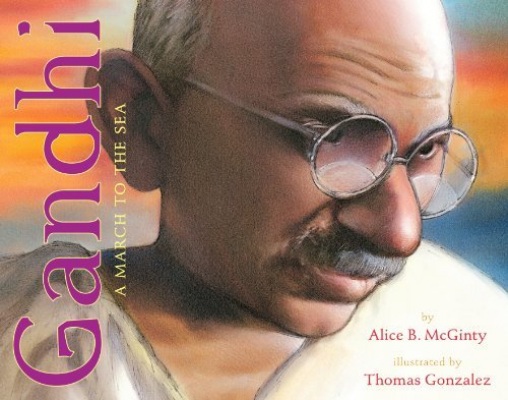
After 50 years, the inspirational and internationally renowned Mahatma Gandhi is remembered for the courage of his convictions and his uncompromising message of peace. This book describes Gandhi’s famous March to the Sea to protest the British law that forbade Indians to gather and sell salt, forcing them to buy it from the British. Chronicled through free verse, the book begins with a short introduction explaining the context for Gandhi’s act of resistance. The text has a rhythm that eloquently reveals his compassion for all humans and his vision of uniting all Indians, caste system notwithstanding, in the struggle for their independence; where “every Indian who joins the fightOne more step toward freedom.” The pencil and pastel illustrations bring to life Gandhi’s walk, showing the simplicity of the man, yet the grandeur of his actions. Younger readers are able to grasp the subjects of justice, equality and courage, which can in turn lead to rich discussions on rights and freedoms. A map of the March to the Sea is also included.
Envoyer le lien de ce titre par courriel.
Si vous préférez simplement copier-coller le lien pour votre propre usage, cliquez avec le bouton droit sur ce lien, et choisissez « Copier le raccourci» ou «copier l'adresse du lien ».
* Vous pouvez acheminer ce lien à plusieurs destinataires en séparant les adresses courriel par des virgules.
| Tweeter |