Édition papier : 9780395975671
|
PréscolairePrimaireSecondaire
|
||||||||||||
|
4ans
|
5ans
|
1re
|
2e
|
3e
|
4e
|
5e
|
6e
|
1re
|
2e
|
3e
|
4e
|
5e
|
Do a picture walk of the first few pages. Make predictions about the story.
Discuss what is familiar and unfamiliar to you in this story's setting and how your community is the same or different. Explain the importance of setting in this book.
Working alone or with a partner, use pictures and words to retell the story from the point of view of Kunikdjuaq. Share your story with the class or another group.
Use a Venn diagram to compare and contrast bear legends from different cultures.
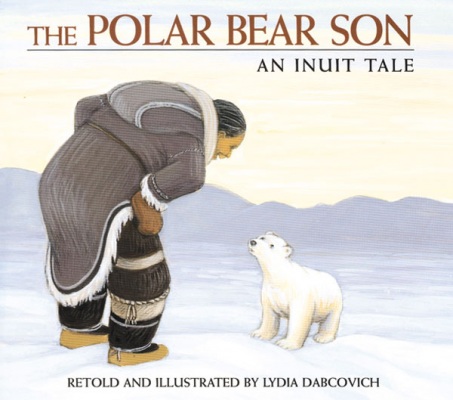
Based on the cover, make predictions about the story.
With the pictures as support, use your own words to retell the story to a partner.
Discuss and list the varying points of view regarding whether to keep the bear or not. Where do you stand on this? Role play, using evidence from the story.
From the story and the author’s notes, work with a partner to make a mind map of Inuit life. Add additional information (from your own prior knowledge) in a different colour.
Use a Venn diagram to compare and contrast bear legends from different cultures.
Before reading, with the title and cover illustration in mind, start an alpha box with vocabulary related to the story. Add to it as you read.
Discuss the story in small groups, answering question cards if needed. Examples: Why were the villagers upset? Which side would you take? How is their life different from yours? Is this tale realistic? What would happen in real life? Would you be afraid of a bear?
Working with a partner, retell the story in your own words. Record your new version in a podcast to share with the class.
The Giant Bear: An Inuit Folktale, The Old Ways
Readers will enjoy this tale about an old woman who adopts an orphaned polar bear cub. In the process, they’ll learn something about Inuit traditions of sharing. Direct language conveys the old woman’s plight: “She tried to fend for herself… But often she was unsuccessful and had to depend on her neighbours for food.” The illustrations use a colour palette of shadow and snow to create rounded forms of fur-bundled people and the adopted bear. Racks of drying salmon, stretched skins and detailed depictions of fur clothing offer a wealth of information about traditional Inuit life. Kunikdjuaq, the bear son, is beloved by the children and grows to become the best hunter in the village. But the men decide he must become meat and skin: as a grown polar bear, he is too dangerous to remain in the village. Young readers may ponder: where do we draw the line in our caring communities? In this case, the old woman and the children help her bear son escape. She and Kunikdjuaq then meet alone, in safety, to eat together and share together—and the old woman brings the leftovers home.
Envoyer le lien de ce titre par courriel.
Si vous préférez simplement copier-coller le lien pour votre propre usage, cliquez avec le bouton droit sur ce lien, et choisissez « Copier le raccourci» ou «copier l'adresse du lien ».
* Vous pouvez acheminer ce lien à plusieurs destinataires en séparant les adresses courriel par des virgules.
| Tweeter |