Édition papier : 9781467744584
 Format ePub : 9781467746601
|
PréscolairePrimaireSecondaire
|
||||||||||||
|
4ans
|
5ans
|
1re
|
2e
|
3e
|
4e
|
5e
|
6e
|
1re
|
2e
|
3e
|
4e
|
5e
|
Graphic memoirs combine different genres and modes. Note how the memoir is introduced through a map, introduction and epigraph. What type of story are these elements setting up? Consider the way text and image work together and identify conventions used by the author.
Discuss the elements that show time in the graphic memoir. How are changes in time and place rendered through panel arrangements, transitions between panels and the use of graphics, colour and text?
Explore a variety of graphic memoirs. Identify conventions (graphic novel and memoir) of these multigenre texts. Keep notes in a reader/writer’s notebook to use in future productions of graphic memoirs.
Use an interactive whiteboard map to find your city and zoom in. Where do you think Beirut is located? Which continent? Country? Is it further north or south than your city? Locate it on the map, noting its topography.
On pages 48 and 49, the author uses a game board to represent the places where she and her family took refuge during the war. Discuss the irony. Express the same information in a more conventional way, through lines drawn on a map. Add dates above the cities.
Create a board game of your own life’s travels, similar to the one in the book . Play each other’s games. Practise asking questions every time you land on a square and, like the author, begin your answers with “I remember ___.”
The Wall: Growing Up Behind the Iron Curtain, Dare to Disappoint: Growing Up in Turkey
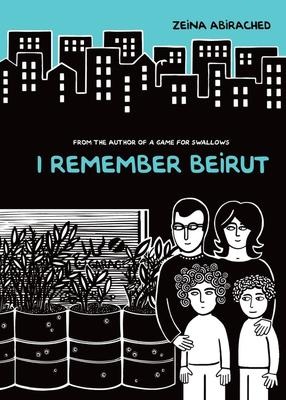
“I remember” is the poetic refrain that echoes throughout this book. “I remember it was hard to find certain items in the supermarket,” “I remember cassette tapes,” “I remember … every time a shell hit in the neighbourhood.” Short sequences convey moments of family life during war, such as when a very small Zeina and her younger brother can’t name the colour of Mom’s car on account of all the bullet holes (“‘Uh … navy blue?’ ‘Uh … with white dots?’”) or when “Father got into the habit of cranking up the volume on his music” as a fleet of military helicopters passed outside his living room window. Gifted design skills are evident in the stylized images. Zeina’s hair is mop of spirals. Her brother’s looks like a nest of macaroni noodles. Spreads project messages as vividly as the best poster art. A map of their neighbourhood is bounded by two thick dotted lines. One is labelled “Where people think no man’s land starts,” the other “Where no man’s land actually starts,” with Zeina’s house in between. The war’s end is depicted with the same acute particulars: a shower with running water, the rubble of the wall that divided Beirut. But the ghost of war remains with Zeina—even as a grown woman—and the rest of her family. This book is valuable both as a memoir and a work of art.
Envoyer le lien de ce titre par courriel.
Si vous préférez simplement copier-coller le lien pour votre propre usage, cliquez avec le bouton droit sur ce lien, et choisissez « Copier le raccourci» ou «copier l'adresse du lien ».
* Vous pouvez acheminer ce lien à plusieurs destinataires en séparant les adresses courriel par des virgules.
| Tweeter |