Édition papier : 9781773064680
|
PréscolairePrimaireSecondaire
|
||||||||||||
|
4ans
|
5ans
|
1re
|
2e
|
3e
|
4e
|
5e
|
6e
|
1re
|
2e
|
3e
|
4e
|
5e
|
Voir et faire autrement
The Pedestrian by Ray Bradbury
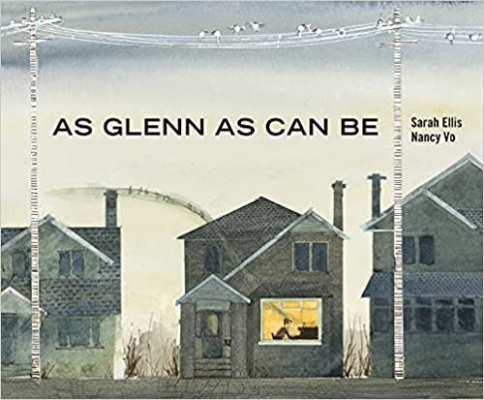
As a child, Glenn Gould was known for his strong likes and dislikes. He liked boats—and driving around the lake—but he did not like fishing because he considered it unkind to fish. He loved nature, but hated the cold so much he even bundled up to go to the beach in summertime. He much preferred being with animals than with people. And although he loved to learn, he hated school. Finally, he loved music and hated that his parents limited his piano practice time to four hours a day. This musical prodigy was soon giving concerts to enthralled throngs but, after a while, he grew to dislike this for many reasons so he played music alone in the concert hall. And around the world, people are still listening today. The art and mind of Canadian piano virtuoso Glenn Gould (1932-1982) is explored in very stylish language (“He roars around the lake singing at the top of his lungs, one hand on the tiller and one hand conducting an orchestra he hears in his head”) and using a clever, child-centric structure based on likes and dislikes: “He loves his dog, Nicky, his rabbits, his goldfish, his budgie and his skunk, but… he finds people more difficult. Especially in groups. He does not like parties.” Readers may be inspired to make their own lists of likes and dislikes to create profiles of themselves or people they know. Atmospheric watercolour illustrations in hues of blue and gold are used to create images that combine realistic, historical scenes with striking symbolic motifs. One spread shows a homey scene of Gould on the floor (long legs folded up, leaning back into the curve of his reclining dog), as his mother (seated in a slipper-chair, with a newspaper on her lap reading CANADA WAR!) ) reaches forward to adjust an ornate radio that approaches the size of one of today’s big-screen TVs. Meanwhile, from the radio and all across the blank facing page, a blue flowing “sound” trail grows wider, along with delicate, pencil-ruled formations of radio waves. An old-style CBC logo emerges from the formations, as the faint words of the announcer can be read through the translucent blue paint (“… Canada has already answered that call…”) Another spread is darker in both tone and message, portraying Gould’s withdrawal from public life as a concert pianist. The composition’s top section shows a close-up of audience members’ feet—womens’ pumps and men’s brogues—walking away. At the bottom of the page, a variety of prescription-pill bottles and liquids glimmer against a dark- blue background, providing a strong contrast to the jagged white “heartbeat blip” line that runs across the section. In the middle, a wide band of yolk yellow divides and anchors the two images. It recalls police tape, with its bold-stenciled “CANCELED” running across the page. (“after a while Glenn does not like giving concerts. Sometimes the concert hall is too cold. Sometimes he doesn’t like the piano. Sometimes he doesn’t feel well.”) The story ends with Gould doing precisely what he likes to do, recording his music alone in the concert hall (“This is his perfect place, no buts about it”), while referencing the enormous impact of this neurodivergent prodigy (“Right at this moment somebody is listening to Glenn play the piano. Running, resting, reading… somebody somewhere is loving the music of a boy …”) and conveying the book’s key underlying lesson for us all: “…who found a way to be completely himself—as Glenn as Glenn can be.” Back material offers fascinating biographical anecdotes, along with children’s resources for further research into Glenn Gould’s life and music.
Envoyer le lien de ce titre par courriel.
Si vous préférez simplement copier-coller le lien pour votre propre usage, cliquez avec le bouton droit sur ce lien, et choisissez « Copier le raccourci» ou «copier l'adresse du lien ».
* Vous pouvez acheminer ce lien à plusieurs destinataires en séparant les adresses courriel par des virgules.
| Tweeter |
Pistes pédagogiques|
PréscolairePrimaireSecondaire
|
||||||||||||
|
4ans
|
5ans
|
1re
|
2e
|
3e
|
4e
|
5e
|
6e
|
1re
|
2e
|
3e
|
4e
|
5e
|
Learning Intention
Students will explore how an author uses contrast in a text to develop character…creates contrast in a text and how this supports understanding of character.
Links to the Program of Study - English Language Arts – Secondary Cycle One
Considers constructed nature of text and its impact on self as reader (QEP, 111)
Draws on cues in familiar structures, features, codes and conventions to make sense of texts (QEP, 114)
Identifies features, codes and conventions used to achieve a recognized social purpose and/or function and/or effect and impact on self as reader (QEP, 115)
Context (Before Reading)
1. Teachers may wish to read the book in its entirety once for pleasure, and to provide background knowledge.
2. Share brief biographical information about Glenn Gould (see back matter). Listen to a sample of his music.
3. Define the term "contrast" as used in the text and provide student-friendly examples. Ask students to generate examples of contrast.
4. Preview the book cover (open wide to the two-page spread) and front and end papers (open sky versus outer space). Guide students in noticing contrast and brainstorming meaning.
5. Provide students with sticky notes, telling them they will be noting examples of contrast throughout the text. Ask students to write one example per sticky note.
Procedure (During Reading)
6. Return to the cover image. Model noting the contrast of "warm yellow, muted blue colours" on a sticky note.
7. Begin reading the text aloud, pausing to take note of contrast in the first few pages (e.g. fishing boat vs. singing in a boat, likes and dislikes, scarf and hat at beach…)
8. Continue reading allowing students to pause and take notes or share ideas with each other.
9. Pause reading after the image of a concert hall and the text "What can Glenn do?" Ask students "We have noticed may examples of contrast. What do these help us understand about Glenn?"
10. Finish reading the book.
Integration (After Reading)
11. Allow students to share their reactions to the text.
12. Lead students in organizing their sticky notes into categories (e.g. images, likes/dislikes, character, opposites, etc.)
13. Conclude by having a discussion around the different ways the author presented contrast and how this helped to understand the life of Glenn Gould.
Extensions
1. Students create a production piece around the theme: Me as Me Can Be; examining likes/dislikes or strengths/struggles, etc.
Links, Resources, References
o Copibec: https://www.copibec.ca/en/agreement-elementary-highschool
Pedagogical application created in collaboration with Western Quebec School Board